
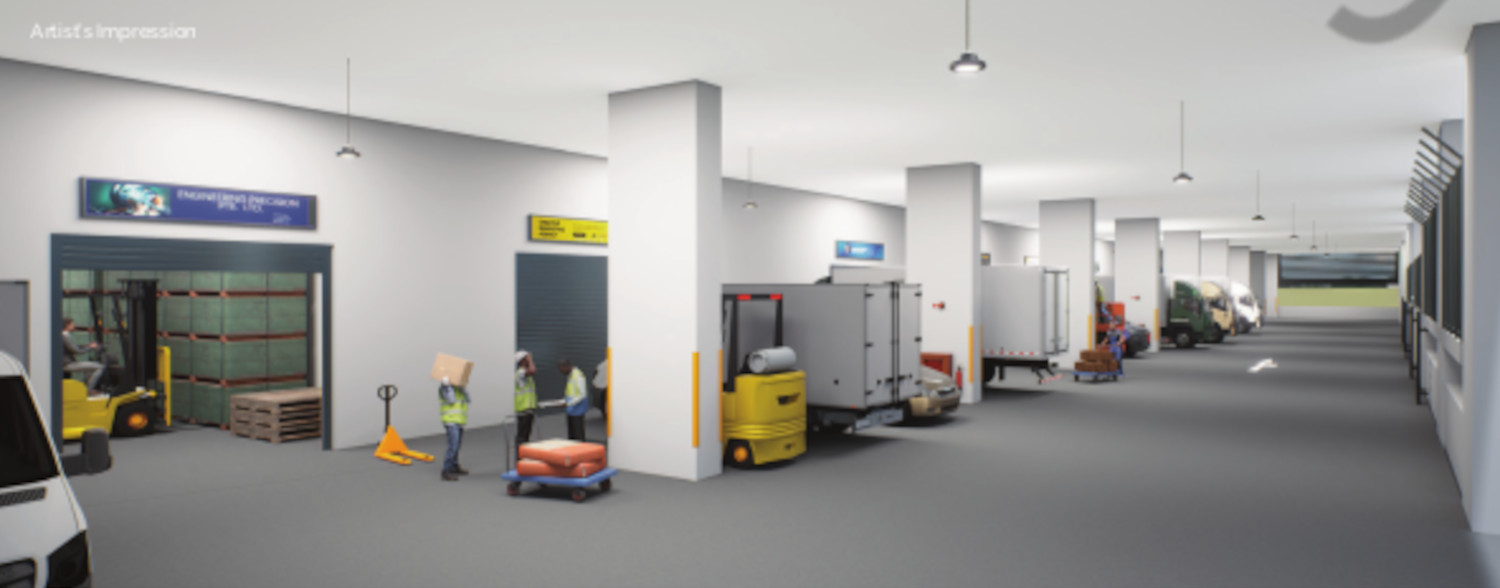

“We are forecasting slow growth as activity in trade activity returns to normal after months of front-loaded manoeuvres in Q3,” in a report. “The broad economic scenario is still cautious given the tariff headwinds and the imposition of new tariffs. Risks remain tilted to the downside, with industrial and logistics businesses deferring major leasing decisions,” report from Savills
If a company is not ready to acquire new physical space or expand, outsourcing to a third-party logistics provider (3PL) may be the correct option. This could then stimulate leasing demand from 3PLs as tariffs stabilise. For buyers entering new lease agreements, flexibility in tenancy terms such as short-term commitment and early termination rights are likely to be preferred.
For occupiers, the other key item that is most important is saving cost—they need good utilisation of space. Occupiers are also reassessing capital expenditure choices to avoid incurring extra CapEx upon lease expiry or relocation. Despite potential subdued leasing momentum in the short term, demand for new high-spec industrial space will probably still have strong fundamentals as occupiers continue to value space-efficient spaces.
Moreover, rents and vacancy rates for high-spec modern industrial space continue to remain firm for the remainder of the year, particularly given limited pipeline availability for factory and warehouse space in the near term.
The Industrial Government Land Sales (IGLS) programme under the direction of JTC Corporation, launched by the Government of Singapore, regularly releases industrial land, which is managed by the Ministry of Trade and Industry. The programme is tailored to make sure there is an adequate supply of industrial space to stimulate economic development, manufacturing, logistics operations and even future industries such as technology and advanced manufacturing in Singapore.
Industrial land supply in Singapore has in recent years been an increasingly important item of property-related industry discussion with an increasing demand for space, and diminishing land supply of industrial land in Singapore. The government periodically tenders land for development for private sectors through the IGLS scheme via public tenders. Developers, industrialists and investors can all bid for these sites to build factories, business parks, logistics, and other industrial development.
In 2026, the Singapore government opened approximately 11.1 hectares of industrial land for eight sites in the first half under the IGLS programme. There are six sites on the Confirmed List, and two on the Reserve List. Sites on the Confirmed List are launched on a fixed timetable of tenders; to launch sites on the Reserve List is a prerequisite that the government’s minimum price is met by the developer. There are 2 sites that are set to launch in 2026 namely Gate+ and CT Gold @ Macpherson that helps to ease the demand for industrial space.
This arrangement enables the government to balance market demand with industrial land supply. The total industrial land supply is somewhat lower than in the year before. Approximately 14.07 hectares of industrial land across ten sites was released in 1H 2025, higher than the 2026 supply. The reduction in supply results from judicious use of industrial land that provides balanced market supply and enough area for growth.
Industrial estates listed under the IGLS plan were normally situated in the industrial districts, including Tuas, Jurong, Ubi, Kaki Bukit and Penjuru. These regions have been Singapore’s manufacturing and logistics hubs for a long time. As an example, past programmes have built sites in areas such as Tuas Avenue 11, Penjuru Road, Gul Drive, Ubi Avenue 1 and Kaki Bukit Avenue 5.
These industrial districts are usually located in proximity to large expressways, ports and logistical facilities. In the case of Tuas and Jurong for example, they are a part of the Tuas Mega Port and the western industrial corridor along the city, and the areas of Ubi and Kaki Bukit in the city fringe around Kaki Bukit also have a presence in light industrial and business park. Developers want to locate so as to have businesses that cater a variety of industries such as manufacturers, food businesses, logistic companies, engineers and technology companies.
The demand for industrial space in Singapore has stood firm in the last few years. Newer industries, e-commerce, advanced manufacturing, logistics- and logistics industry, etc. has been the expansion of the need for modern industrial buildings. The cost of industrial rents have also been climbing. The industrial rental index rose by around 2.3 per cent year-over-year in the third quarter of 2025, driven by consistent business appetite for operational space, according to JTC data.
This trend has led to growing demand for industrial land tenders, especially those that are strategically located close to accessible locations, and/or close to new business districts. Developers typically also consider these sites as an opportunity to make modern ramp-up factories, supply facilities and industrial complexes.
The government has also made policy modifications to encourage companies that participate in industrial land tenders. Here, for instance, the last three years of lease tenure for any new allocations of greenfield industrial land now have to be added. This adjustment was introduced because industrial development normally take a number of years to plan and construct. Extension of the lease tenure permits developers and industrial operators to enjoy the planned productive period of their lease when their facilities are built. Such policies help industrial developments make possible more profitable and more businesses will be more comfortable participating in government land sales.
Land sales by the Industrial Government is a key part to formulate Singapore’s industrial ecosystem. To ensure a sufficient amount of available land is for industries to be developed and the efficient land use promoted the government release land within a defined and organized way. An industrial land supply also ensures that clean energy, digital infrastructure and advanced manufacturing and other new economic sectors can be developed. For illustration, Singapore had been allocating land on Jurong Island for renewable energy facilities as well as the infrastructure of data centres, due to the country’s focus on sustainable and high-value industries. Such initiatives highlight how closely aligned the planning for industrial land is with Singapore’s long-term economic strategy.
The outlook for the demand for industrial land here in Singapore will also continue to be stable, as both businesses and residents will grow and adapt to changing economic trends. Modern facilities will still be needed for logistics companies, manufacturing firms, technology businesses and food producers to work efficiently.
As for land shortage, then, industrial sites awarded under the IGLS programme will remain constrained and tightly regulated. Such a controlled supply helps to support stability in the market for industrial property and enable businesses to have the level of space needed. Meanwhile, new sales of industrial Government land will present developers and investors with the potential to develop modern industrial projects of today which can contribute to Singapore’s development from an industrialisation perspective.
As the region continues to grow its profile in business, logistics and technology, the industrial land released through the IGLS programme will continue to be an essential pillar of Singapore’s urban and economic development strategy.


